
































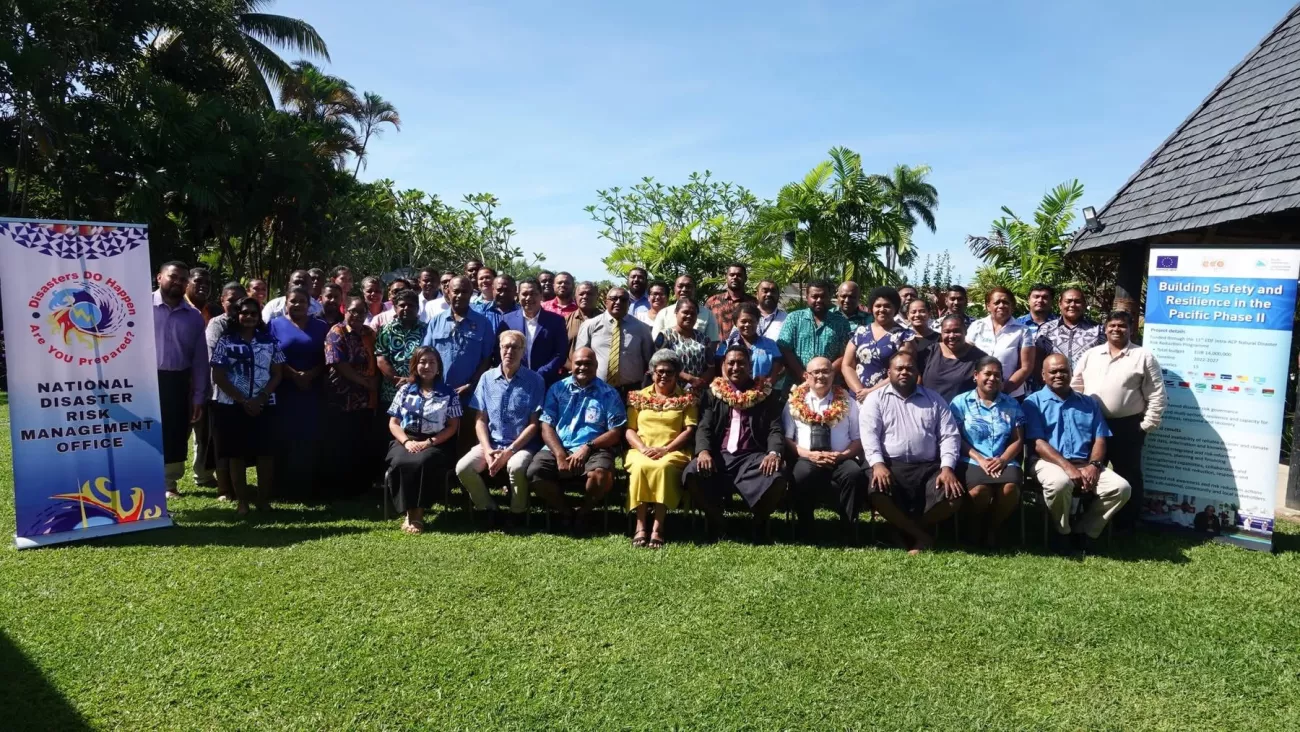
Fiji has completed training officials from roughly 30 ministries and agencies to use a new online system that, for the first time, will let the government track disaster risk reduction work across every sector from a single platform.
The National Disaster Risk Reduction Policy Online Tracker replaces a manual reporting process that officials say makes it challenging to measure whether the country’s disaster preparedness policies are being carried out.
Fiji faces average annual disaster losses of FJD 158 million from earthquakes and tropical cyclones, according to World Bank estimates, and the UN Economic and Social Commission for Asia and the Pacific puts the country’s estimated average annual loss at a minimum of 7 per cent of GDP.
The Pacific Community (SPC) developed the tracker under its Building Safety and Resilience in the Pacific II (BSRP II) programme, funded by the European Union (EU). The EU invested approximately EUR 128,326 (about FJD 300,000) in this component of support for Fiji’s disaster risk reduction efforts.
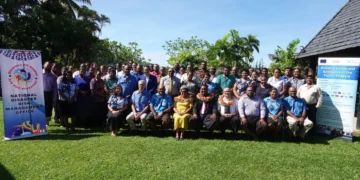
A five-day training workshop held from 23 to 27 March introduced the system to roughly 50 participants, including Disaster Service Liaison Officers, ministry representatives, and technical staff from the National Disaster Risk Management Office (NDRMO). The workshop combined demonstrations, hands-on practice, sector sessions, and simulation exercises, and also collected user feedback for final adjustments to the platform.
Opening the workshop, Acting Permanent Secretary for Rural and Maritime Development and National Disaster Risk Management, Mr Mitieli Cama, emphasised that reliable information is the backbone of effective decision-making.
“This tracker gives us a digital platform that brings all DRR efforts into one place, ensuring that ministries can report progress in real time and identify where support is needed. It represents a major step forward in strengthening evidence‑based planning and improving how we manage resilience across Fiji,” he said.
He added, “DRR requires coordinated action across all sectors, and the new system helps make this collective responsibility clearer and more accountable by providing visibility on progress and gaps and ensuring DRR is embedded across Fiji’s development pathway.”
The SPC Geoscience, Energy and Maritime Division’s Deputy Director for the Disaster and Water Resilience Programme (DWRP), Litea Biukoto, said,
“The Pacific Community is honoured to work alongside the Government of Fiji, in particular the National Disaster Risk Management Office, to operationalise the systems and capabilities that bring the National Disaster Risk Reduction Policy to life at national and sub-national levels.”
Acting Head of Cooperation for the EU Delegation to Fiji, Ms Carine Hanssens, described the tracker as a tool for enabling improved monitoring of DRR initiatives, strengthening coordination across ministries and enhancing transparency and accountability in national reporting.
“The EU is pleased to partner with the Fiji NDMO and the Pacific Community through BSRP II to embed and operationalise Disaster Risk Management across key sectors, ensuring that a disaster risk lens is applied to national planning and financing.”
Apart from monitoring progress in implementing the many action items under Fiji’s National Disaster Risk Reduction Policy, the system will also align with national, regional, and global reporting frameworks, including Fiji’s obligations under the Sendai Framework for Disaster Risk Reduction 2015 – 2030.
According to the United Nations Office for Disaster Risk Reduction, as of March 2024, 24 of 38 Small Island Developing States (64 per cent) had reported having national DRR strategies in place, though challenges remain in disaster data collection and access to resources for implementation
S
PC will continue to work closely with Galexo Consulting and the NDRMO as the tracker is refined and rolled out nationally to strengthen disaster risk reduction monitoring and evidence-based planning.
About the Building Safety and Resilience in the Pacific Project
The Building Safety and Resilience in the Pacific (BSRP) project is an ACP-EU Natural Disaster Risk Reduction Program initiative funded by the European Union and implemented by SPC in 15 countries across the Pacific and Timor-Leste.
+
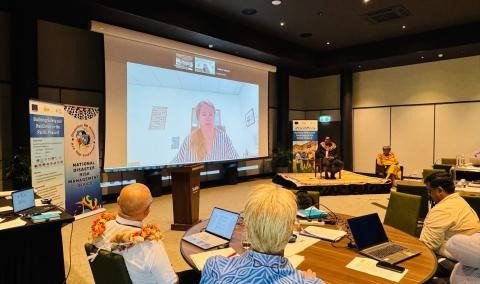
Photo credit: Fiji Government
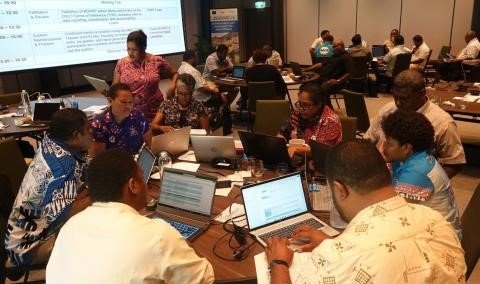
Photo credit: Fiji Government